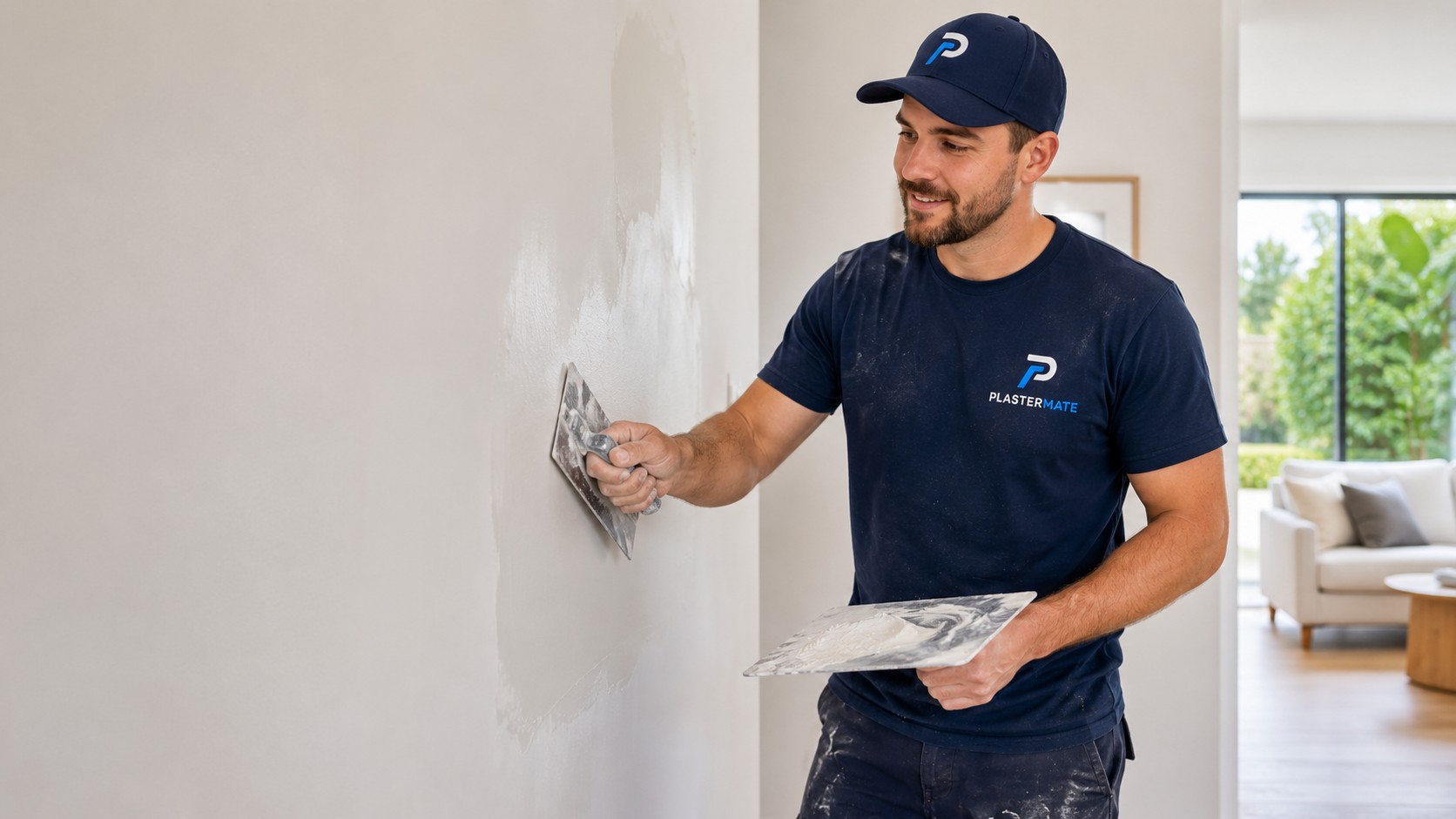
What is plasterboard?
Plasterboard (also called gyprock or drywall) is a manufactured sheet product with a gypsum core faced on both sides with paper. It is fixed to timber studs or steel/timber furring channels with screws or nails, and the joints between sheets are finished with jointing tape and compound to create a flat, continuous surface. Plasterboard has been the standard wall and ceiling lining in Australian homes since roughly the mid-20th century, and it is what almost all newer builds and renovations use today.
What is solid plaster?
Older Melbourne homes — particularly Victorian, Edwardian and California bungalow-era housing common in the inner and older established suburbs — were often built with solid plaster instead. This is a wet-applied material, traditionally lime or gypsum based, spread in coats over timber lath (thin battens fixed across the studs) or directly over masonry and brick. Solid plaster is generally thicker and more rigid than plasterboard, can include decorative elements like ceiling roses and ornate cornice profiles, and is more brittle when it does crack or fail.
How to tell which you have
A simple knock test is a good starting point: plasterboard sounds hollow and slightly springy, while solid plaster over masonry sounds dull and solid, and solid plaster over lath sounds hollow but firmer than board. The age of the home is a strong clue — pre-1950s properties are far more likely to have solid or lath plaster, while anything renovated or built from the 1960s onward is almost always plasterboard. Looking at an exposed edge near a power point, vent or existing damaged area can also confirm which material you are dealing with, and a uniform screw or nail pattern across a wall usually indicates board fixed to studs.
Why it matters for a repair
The two materials need genuinely different repair approaches, which is why it matters before any work starts. A hole in plasterboard is typically repaired by fitting new backing and a matching offcut of board, then taping and setting the joints. A repair in solid plaster is built up in coats to match the existing thickness and profile, sometimes over a bonding agent or mesh where the lath or key has been damaged. Matching an existing textured or decorative solid-plaster surface — particularly older cornice — takes more time and a different skill set than a flat plasterboard patch. Solid plaster ceilings are also heavier than plasterboard, so sagging or water-damaged solid ceilings are worth having assessed sooner rather than later.
If you are dealing with a damaged section and are not sure which material is involved, a patch repair or small plasterboard install can usually be assessed from a couple of clear photos. Older homes with decorative solid-plaster ceilings often also need cornice repairs matched to the existing profile.
Get the right repair for your walls
Knowing which material you have before booking a repair helps set the right expectations on both timing and finish. Call Plastermate to talk through what you're dealing with.